Review: Tree of Life Earring Laser Cut Design for Embroidery
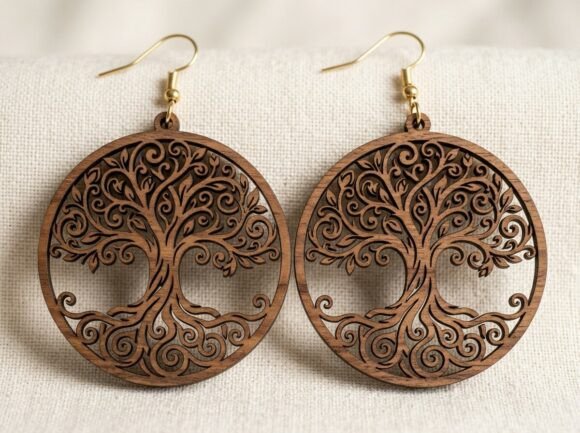
As a designer who spends more time staring at stitch simulations than I do sleeping, I approach every new digital embroidery file with a mix of excitement and skepticism. When I first opened the Tree of Life Earring Laser Cut Design, my initial reaction wasn't about how it would look as a laser-cut wooden earring—which is its intended purpose in the Crafts category—but rather how those flowing lines would translate into thread. The product description promises "elegantly detailed" branches and swirls, and visually, the Graphics are stunning. But for us embroidery professionals, beauty is only half the battle; stitchability is the other half.
First Impressions: Mood and Visual Personality
The silhouette of this design immediately evokes a sense of organic growth and connection. It is not a rigid, geometric tree; instead, it features sweeping curves that suggest movement, almost as if caught in a gentle breeze. This fluidity makes it an excellent candidate for projects requiring a soft, bohemian, or nature-inspired aesthetic. The layout is balanced, with a central trunk anchoring the composition while the branches reach outward symmetrically. For an embroidery project, this symmetry is crucial because it simplifies the hooping process and ensures the final finished product looks intentional rather than lopsided.
However, the level of detail in the swirls raises immediate questions about stitch density. In laser cutting, fine lines are easy to achieve. In embroidery, those same lines can become a nightmare of bird-nesting if the digitizer hasn't accounted for pull compensation or if the thread colors lack sufficient contrast against the background. My first instinct was to imagine this design scaled down for a pocket logo versus scaled up for a back panel. The intricate nature of the branches suggests it needs space to breathe; cramming it into a tiny hoop might result in lost details where the running stitch or satin columns merge together.
Real-World Application: From Concept to Custom Apparel
To truly test the viability of this design, I mentally placed it into a real-life scenario: a custom order for a boutique client wanting a series of personalized gift items for a wellness retreat. The client requested sweatshirt embroidery on heavy cotton blends and tote bag design options on canvas. Here is where the Tree of Life Earring Laser Cut Design shines and where it requires caution.
On a heavyweight sweatshirt, the fabric provides a stable foundation. The texture of the fleece can actually hide minor imperfections in stitch coverage, making the swirling branches pop with a tactile quality. If I were to digitize this myself or adjust the existing file, I would lean towards a combination of fill stitch for the trunk to give it weight and satin stitch for the finer branches to maintain definition. For the tote bags, the canvas offers even more stability, allowing for a larger scale that showcases the elegance of the tree without worrying about fabric distortion.
Imagine this design centered on a neutral linen apron or a nursery pillow cover. The organic theme fits perfectly with current trends in home decor and eco-friendly branding. For an Etsy seller or small shop owner, this versatility is gold. You aren't just selling a stitched image; you are selling a mood. A customer buying a baby embroidery item wants something that feels gentle and protective, and the Tree of Life motif delivers that emotional resonance instantly.
Navigating Fabric Challenges and Technical Constraints
While the design is beautiful, practical application demands we discuss where it might struggle. If you plan to use this on stretchy fabrics like jersey knits for t-shirts, you must be vigilant. The extensive branching creates multiple points of tension. Without a high-quality cut-away stabilizer, the fabric may pucker around the dense areas, distorting the graceful swirls into jagged lines. Similarly, placing this on a curved surface like a cap requires careful attention to the center line; any deviation will be obvious given the symmetrical nature of the tree.
Dark fabrics present another consideration. Since this design relies on line work rather than solid blocks of color, using light thread on black fabric could result in a "floating" effect that looks elegant but might lack durability if the stitches aren't dense enough to cover the background completely. Conversely, dark thread on light fabric highlights every single stitch path. I recommend testing the design in both black-and-white mockups before committing to production. This helps you see the structural integrity of the design without the distraction of color choices.
Furthermore, small details matter. If the original SVG or DXF files contain extremely thin vectors, your embroidery machine might struggle to interpret them as valid stitch paths. Always check the hoop size requirements. If the design is too large for your standard hoop, you might need to split it, which is ill-advised for a continuous image like a tree trunk. Ensure the embroidery file you purchase or create fits your equipment capabilities.
Enhancing Brand Value and Customer Trust
For creative entrepreneurs, the choice of design directly impacts brand perception. Using a high-quality, well-executed Tree of Life motif signals professionalism. It tells your customers that you care about aesthetics and detail. Whether you are creating commercial embroidery for corporate uniforms or holiday embroidery for seasonal gifts, consistency is key. If this design becomes part of your signature collection, ensure that every stitch meets a high standard. A sloppy execution of such a detailed design can undermine trust, whereas a crisp, clean finish elevates the perceived value of the handmade product.
This design also works exceptionally well for printable mockup creation. Before you even stitch a single thread, you can place the graphic on digital templates to show clients potential placements on custom apparel or accessories. This visual communication tool helps close sales faster, as clients can visualize the end result. For those selling design assets, offering this as part of a bundle with matching elements could increase average order value.
Final Verdict and Designer Notes
In conclusion, the Tree of Life Earring Laser Cut Design holds significant potential for the embroidery world, provided it is treated with technical respect. It is not a "dump and stitch" file; it requires thought regarding fabric choice, stabilization, and scaling. Before launching this into your craft business, I strongly advise stitching a sample on scrap fabric that matches your final material. Check the underlay, inspect the corners of the branches for clarity, and verify that the stitch density does not make the fabric stiff or uncomfortable to wear.
Always confirm licensing terms before selling finished items or digital derivatives. While the source files come in formats like SVG, DXF, EPS, and PDF, these are vector graphics intended for cutting. To use them for embroidery, they must be properly digitized into a machine-readable format unless a pre-digitized version is explicitly included. Do not assume compatibility; verify the file types and machine specifications. With the right preparation, this design can become a staple in your portfolio, adding a touch of natural elegance to everything from embroidered patches to luxury home textiles.